Saturday, June 19, 2021

Poof

One minute, she was here, full of life and laughter. Then she was gone. Or so it seemed, when after eleven months of battling cancer, on a sunny day in June, we laid Liz to rest at age 52. Although, in truth, we watched that burst of energy that always surrounded her, diminish each week during the regular video call, on the suddenly all-pervasive Zoom technology. That was how we shared her final journey.

She left us to ponder how, with all she did in life and how she lived that life, that insidious disease could choose her. A health-conscious vegetarian, with a passion for yoga, she was not only a practitioner, but also an instructor. Exercise, we’re told, is a mainstay for longevity and not many could compete, as Liz did, in two Ironman Triathlons. What it took to prepare for the 2.4 mile open water swim, 112 mile bike race, and 26.2 mile marathon, would challenge anyone to understand how that level of endurance could be vanquished by unforgiving, multiplying cancer cells.

Yet, over and over, it takes away people we all know who seemed destined for long, healthy lives.

Admittedly, I’m among the baffled. Meant to be a mystery, perhaps. Still, maybe there’s an answer in the First Law of Thermodynamics. We’re told that energy cannot be created or destroyed. However, it can be changed from one form to another. Is that what happened to Liz? Is she still with us, here on earth, just no longer visible?

I wish that could provide much needed comfort. Because just the other day, she was vibrant, laughing, and now ... poof. 


Sunday, December 6, 2020

Starting Over


Excited to be nearly finished with the final editing of my second murder mystery/thriller, Sanctuary. A trusted, critical first reader has been invaluable with editing, finding typos (although there will always be more), and suggestions for improvement. Would love to have a publisher take on my new novel, and will send it to a few who do not require agent representation, but I’m more interested in getting it out to my “public.” It’s been about three years in the writing and time to move forward, so will take the self-publishing route again as well.

Now ahead lies the task of coming up with a fresh idea for my next project. The Westport Writers Workshop panel discussion on Writing Through the Holidays inspired a number of ideas for how to get started again, like:
  • Turn to real life occurrences as the impetus for your novel (which is what I did for The Incident and Sanctuary).
  • Read the best writers in your genre. In my case, I will again read PD James beginning with An Unsuitable Job for a Woman.

  • Start the novel with an inciting incident, in my case – murder. An inciting incident is the plot point or event that hooks the reader into the story. It’s the particular moment when an event thrusts the protagonist into the main action of the story.

  • Write every day – or at least set aside dedicated time to think about what you want to write.

  • Create an outline of how your story will proceed. This is not cast in stone and can be easily altered as the writing and plot line unfolds.

  • Get out and walk most days to clear your head.

The ideas have begun percolating in my head and will soon find their way onto my computer screen.


Monday, February 17, 2020

The Art of Death


Like many of us, I’ve held an almost ghoulish fascination along with a healthy fear of death since a young age. Perhaps it started at Catholic Sunday school. I could barely tear my eyes away from that page in the catechism depicting a sinister devil with his pointy tail, horns and pitchfork surrounded by fire and young children burning amongst the flames. But even now, where my leanings are more toward dismissing the Bible as more of an elaborate set of often grisly stories passed down through the ages, death is captivating in all its mystery. Whether devout religious or pragmatic atheist, the idea of death looming ahead surely gives most of us moments of contemplative pause. It is rarely a dignified process, not unlike birth. It reaches each of us no matter the course or length of our life – everyday Joe or famous actor; evil-doer or stunning vocalist; even a genius like Stephen Hawkings, who had one of the better grasps on how we all got here.

The renowned cosmologist had faced death since his diagnosis of ALS at the age of 21. Mr. Hawkings said, “I’m not afraid of death, but I’m in no hurry to die. I have so much I want to do first.” Rejecting the notion of life after death, he said the brain is not unlike a computer. It will stop working when its components fail. He proposed, quite simply, that while on earth, "We should seek the greatest value of our action.”

Still, to paraphrase Diane Butler Bass, author of Christianity after Religion, “Very few people can function without some fear of death hanging over them. We’re human beings and we’re very fragile. And so long as we’re fragile and there’s the fear of what comes next, God will be hovering behind our shoulders. When you look over your shoulder, you look up to the stars and ask the question, why?”

But rather than looking up to the stars, where I’m pretty sure no answer will be forthcoming, I’ve stayed grounded on earth to explore what I see as the tangible art of death. I wander through cemeteries and grave yards. It is there that I find a quiet, dignified beauty. It can be found in the epitaphs on head stones, or the rolling terrain of ancient burial grounds. It is here that we can luxuriate in the breezes that rustle the leaves in trees that stand guard over the bodies buried beneath them.

Saturday, July 1, 2017

On behalf of the President ...

My father, a World War II veteran, died on January 6, 2017, at the age of 101. He was buried with military honors at the small Nichols Farm Burial Grounds behind the firehouse in Trumbull, CT. The service was dignified, moving and for me, unforgettable. After a volley of shots, the bugler played taps, and the American flag, which had draped my father's coffin, was carefully folded in the traditional tri-cornered shape, which I have since learned is emblematic of the tri-cornered hat worn by the patriots of the American Revolution. 


The flag, showing only the blue field with stars, was then presented to me by a member of the Army honor guard with these words:

"On behalf of the President of the United States, and a grateful Nation, please accept this flag as a symbol of our appreciation for your loved one's honorable and faithful service."


This emblem of our freedom, and all those who fought and gave up their lives for that freedom, now rests on a shelf in my home where I see it daily. 

I am grateful for many things, but this Independence Day, as I look lovingly and with pride at that flag, I am particularly grateful that when the banner that represents our great country was presented to me, the individual who held the revered office of President was a decent, respectable man, just like my dad.


Thursday, January 12, 2017

Remembering Charlie: December 27, 1915 - January 6, 2017

Almost without fail, when we were out with Dad, typically at Outback or the Plaza Diner, you could hear waiters, waitresses and even some diners call out “Hey Charlie” when we walked through the door. Often someone would walk over to say hi or have a quick chat. They either worked at GE, bowled, golfed at Tashua Knolls or played bingo with him. Sometimes they would ask what his secret was, since he had reached 100 years healthy, happy and living the life he wanted. He used to say “Dewars and soda.” But Tim believed, especially lately, that it was his attitude.  

Charlie enjoyed simple things nearly up to his last moment. Hallmark movies and sports on TV – in particular golf, football and of course UCONN girls basketball. He watched with delight and enthusiasm; remembered scores and which teams were playing when. 
On December 18th, the night he fell at his house, Tim and I had just left him watching football after our traditional dinner at Outback where he had clam chowder, fillet mignon, and garlic mashed potatoes. Bob Gadys, someone he hadn’t seen for over 20 years, stopped by our table to say hello to Charlie. He lived behind the Clark family on Asylum Street for years, worked with Dad at GE and bowled with him on the GE league. His parting words that night were, “Charlie, you are my hero.” That was a common theme. The week before, Tim’s nephew Ryan and his wife, Lindsey, joined us for Sunday dinner at Outback. Ryan later told Tim, “Charlie is my role model.” 
Dad’s mind was sharp, a better memory than most. Over the past several years he would text me every morning on his iPhone to let me know he was up and about, usually by 8 a.m. In fact, he used his phone, always attached to his belt, to text his neighbors Russ and Janice when he fell and that he needed help; then called us. He knew how to get from point A to point B better than any nav system. He helped run Saint Gabe’s bingo for years and the staff there continued to seek his help when there were problems with the equipment. 
He loved his family certainly, but he loved no one more than his wife of 60 years, Marion, who he called Clarkie, which is what he subsequently called his great grandson, Clark. He missed her every day, visited her grave often, but never complained. He just kept going. 
For those of you who don’t know, he was the eldest of 15, born to Nellie and Charles Adam Clark. Sadly many of his siblings have predeceased him. He was a veteran of World War II, serving in the Army. Most recently, we texted each other while watching the History Channel on the 75th anniversary of Pearl Harbor. I asked where he was when the attack occurred. He wrote back that he was stationed at Fort Wright off of New London. Like most of that generation, he said little about his service overseas. When I asked who was his favorite of the 17 presidents who held office during his lifetime, not surprisingly he said without hesitation, FDR. 
Dad was always there for us – whether for directions, to make sure my tires had enough tread, or tell us what was happening around town or the world. And ultimately, he helped me deal with the inevitability of this day. He was a gentleman, tipped his ball cap and held doors open for others. When he drove, which lately was only to the diner up the street, a cigar was a constant accessory.
His special, indescribable manner endeared him to all he came near, although he seemed unaware of the effect he had on people. Many of the nurses who cared for him at Bridgeport Hospital and Cambridge Manor would say to me, “He’s so cute.” When I told him that, his reply was “horsefeathers,” his strongest curse word.
His support and strength have meant everything. When the surgical team was wheeling him into the operating room to repair his hip two days after he fell, we held and squeezed hands right up to the OR door. When finally I had to let go and walk away, one of the team called back, “He’s lucky to have you.” I replied, “No, I’m lucky to have him.”


Wednesday, October 5, 2016

Plot Ingredients

Where do fiction writers get their story ideas? Well, I can tell you where I did, and based on what I’ve read, many writers take a similar approach. Here’s the recipe:

  • Take at least one real-life experience.
  • Combine it with headlines (past or present).
  • Throw them into a mental Mixmaster.
  • Add buckets of imagination.

Then, if you’re clever, creative and lucky, you come out with a compelling plot.

Drug-assisted sexual assault informs my story as do the headline-making accusations against Bill Cosby. By mashing up these events with research into psychopathic behavior and the unsolved Gilgo Beach, Long Island, serial murders, voilĂ , a psychological thriller emerges.

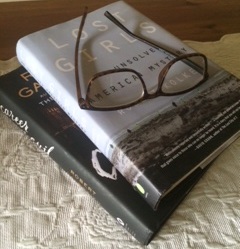
Lost Girls by New York Magazine contributing editor, Robert Kolker, was especially helpful in its examination of the murder victims’ lives through interviews with their families and friends. The first of ten bodies was discovered in December 2010. All were online escorts who had been strangled, their bodies wrapped in burlap sacks before being dumped along Gilgo Beach. The consensus of investigators was that all were killed elsewhere.

Stephen King has said, “I get my ideas from everywhere. But what all of my ideas boil down to is seeing maybe one thing, but in a lot of cases it’s seeing two things and having them come together in some new and interesting way, and then adding the question, ‘What if?’ ‘What if’ is always the key question.”

Here’s my ‘What if?’:

What if an employee suspects her company’s CEO of sexually violating a female co-worker, and a week later sees him among onlookers at the murder scene of a prostitute?

To these circumstances, I added the CEO’s fragile wife who also makes disturbing discoveries about her husband. Stephen King’s brilliant short story, “A Good Marriage” in Full Dark, No Stars, was the inspiration for this character and chilling sub-plot.

I threw in a handsome detective, charged with investigating the long-standing serial murders, to add tension–romantic and dramatic–as the story’s heroine goes down treacherous paths with shocking outcomes to expose the CEO and validate her suspicions.


Monday, September 12, 2016

Truth Is Stranger Than Fiction

My writers workshop kept me on the straight and narrow while working on The Incident, my first novel. I was encouraged to write often, every day in fact. And every week, I read my work to the other participants–smart people, some already published, some aspiring authors, but all contributing insights that either validated mine or offered new ones I hadn’t considered. After almost three years, I have put together approximately 80,000 words, comprising some 330 pages, to create a psychological thriller. (Now all I have to do is find a literary agent and publisher - even more difficult than writing it!)

One of the things that struck me during my workshop sessions was when someone in the group questioned a particular situation or character in my story. I would often say, “But that really happened.”

“So what?” was the response. “It’s not believable.”

As Mark Twain said, “Truth is stranger than fiction, but it is because Fiction is obliged to stick to possibilities; Truth isn’t.”

This supposition sent me back to the drawing board more than once to rewrite scenes or characters into more realistic, albeit fictionalized, versions of the truth so readers would find the story credible.

One of the main characters in my story is made CEO of a company without having significant prior business experience. While in reality, this can happen (and does), my workshop colleagues cried foul and said that won’t fly. So I wrote that development in such a way that made it more plausible. The newly appointed CEO became the company owner’s son-in-law.

Here’s a related excerpt from the book:

“What would you think about taking over?” said Herbert. “Not permanently, but at least for a while. I need someone to pull in the reins over there. Monk spent money faster than my ex-wife.”
Herbert’s eyes drilled into his son-in-law’s looking for a sign of hesitation. He saw none. Becker’s face was a cement barricade, as always. It was one of the things he liked most about the German since he had insinuated himself into life on the estate and Wirth Holdings through his sharp mind, competence and loyalty. Whatever emotions Becker had were kept in his private, unassailable vault, and Herbert saw that this occasion was no different.


Nepotism allows this circumstance to become conceivable.